

 Sep 22, 2026

Heartworm disease is a life-threatening condition in dogs, but thankfully, there are several preventive treatments available for it today. Heartgard Plus and Interceptor Plus are two established heartworm disease preventives for dogs.
Both are monthly, chewable treatments used to help prevent heartworm disease in dogs. Let’s break down the similarities and differences between Heartgard Plus and Interceptor Plus in a simple way to help you choose the most appropriate product for your dog.
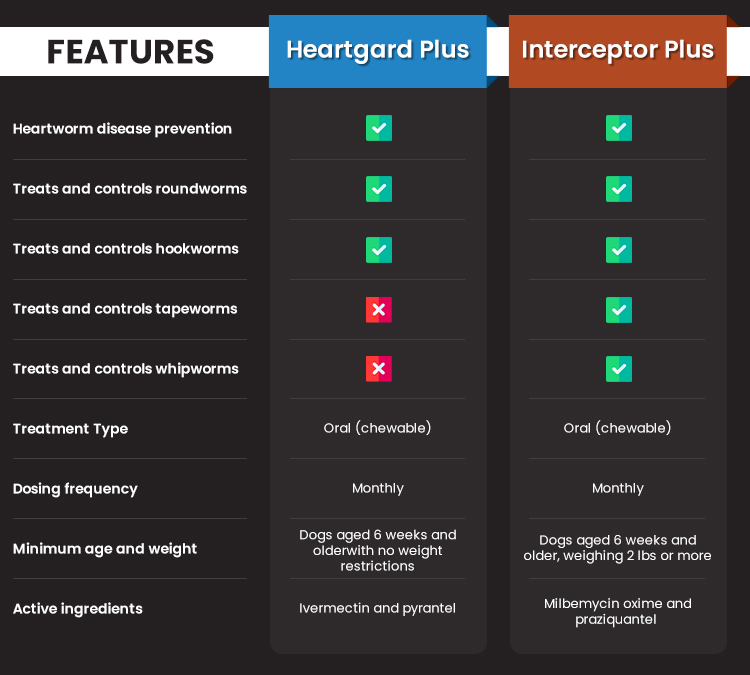
Heartgard Plus is a monthly oral chewable heartworm preventive for dogs. It is indicated for the prevention of canine heartworm disease and for the treatment and control of roundworms and hookworms. It is approved for dogs and puppies 6 weeks of age and older.
Interceptor Plus is also a monthly oral chewable preventive. It is labeled for the prevention of canine heartworm disease and the treatment and control of adult roundworms, hookworms, whipworms, and tapeworms. It is approved for dogs and puppies weighing at least 2 pounds and 6 weeks of age or older.
Although these two treatments have many similarities, there are some important differences to consider:
Heartgard Plus has ivermectin and pyrantel as the key ingredients:
Interceptor Plus contains milbemycin oxime and praziquantel as the active ingredients:
Heartgard Plus treats and controls two types of intestinal worms in dogs:
Interceptor Plus covers four types of intestinal worms in dogs:
Interceptor Plus has broader coverage for intestinal parasites. So, if your dog needs routine protection against whipworms and tapeworms, Interceptor Plus may be a more suitable option.
Heartgard Plus is labeled for dogs 6 weeks of age and older. Interceptor Plus is labeled for puppies 6 weeks and older and weighing at least 2 pounds. For very small puppies, weight matters when selecting the appropriate product and dose. So, if you have a puppy, the weight criteria for both the products would matter a lot.
Heartgard Plus has shown a wide margin of safety at the recommended dose level in dogs, including pregnant or breeding dogs, stud dogs, and puppies aged 6 weeks or older. In contrast, the safety of Interceptor Plus has not been evaluated in breeding or lactating dogs.
Both treatments are available in different dosage strengths for different dog weight ranges:
Heartgard Plus:
Interceptor Plus:
Despite the differences, Heartgard Plus and Interceptor Plus share these features:
Both Heartgard Plus and Interceptor Plus for Dogs help prevent heartworm disease caused by Dirofilaria immitis. However, neither should be viewed as a treatment for an established adult heartworm infection. These products do not work against adult heartworms.
Both are oral chewables administered at monthly intervals. It is important to give a heartworm preventive on time every month, as any gap can increase the risk of heartworm disease in dogs.
Heartgard Plus and Interceptor Plus are both labeled to treat or control certain species of roundworms and hookworms in dogs. Heartgard Plus helps treat and control three species of hookworms (Ancylostoma caninum, Uncinaria stenocephala, and Ancylostoma braziliense), whereas Interceptor Plus is effective against Ancylostoma caninum only.
Also Learn: Heartworm in Cats - How to Keep Your Felines Safe
Heartgard Plus and Interceptor Plus both can be effective choices for dogs when used correctly as per the product label and your veterinarian’s recommendation. The more appropriate option depends on your dog’s parasite exposure, medical history, and weight.
If your dog's main preventive needs are heartworm protection plus coverage for roundworms and hookworms, either of these treatments may be a suitable option.
If your veterinarian also wants your dog's monthly preventive to cover whipworms and tapeworms, choosing Interceptor Plus may make more sense.
Irrespective of the product you decide to choose, keep these things in mind:
Following these simple tips will help you keep your dog safe, healthy, and happy for years!
Heartgard Plus and Interceptor Plus have demonstrated safety when used as according to the respective product labels. But, like any other treatment, adverse reactions can occur.
According to the product label, Heartgard Plus has shown a wide margin of safety in pregnant or breeding dogs, stud dogs, and puppies aged 6 weeks or older, when given at the recommended dose levels. Interceptor Plus is suitable for puppies from 6 weeks with at least 2 lbs of body weight. The safety of this treatment has not been evaluated in breeding or lactating dogs.
Based on the longer parasite coverage list of Interceptor Plus, it may appear that Interceptor Plus is the more comprehensive treatment option than Heartgard Plus. However, broader intestinal parasite coverage doesn’t mean it provides superior heartworm prevention for every dog.
Similarly, Heartgard Plus isn't an inferior product simply because it doesn't treat or control tapeworms or whipworms. The “better” product is the one that is appropriate for your dog's individual needs.
Heartgard Plus contains ivermectin, and studies with ivermectin referenced in the product label of Heartgard Plus indicate that certain dogs of the Collie breed are more sensitive than dogs of other breeds to the effects of ivermectin administered at elevated dose levels. However, according to the product label, it has demonstrated no signs of toxicity at 10 times the recommended dose in sensitive Collies.
Therefore, the product label supports suggest the safety of Heartgard Plus in the Collies when used as directed, but your veterinarian should approve its use based on your dog's breed, medical history, and all treatments or supplements your dog receives before.
Yes, because a dog can be on prevention and still become infected if doses are missed or delayed. As a general recommendation, dogs should be tested at least once annually according to the veterinarian’s recommendations.