

 Jun 16, 2021
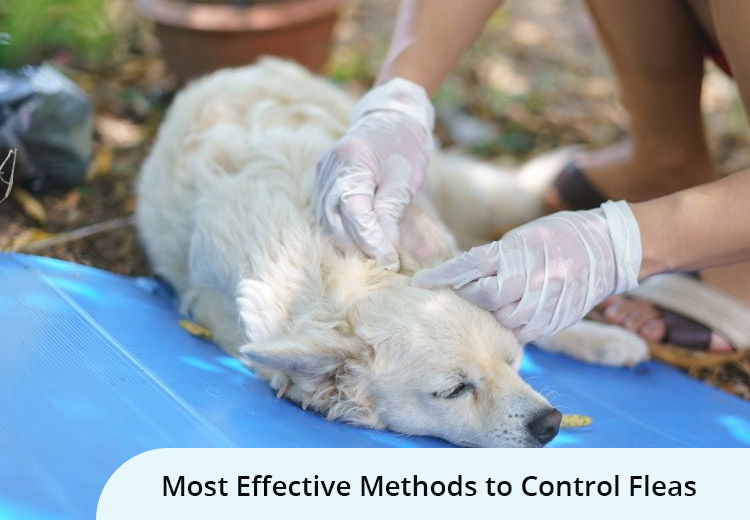
Just like every other pet owner, you want to keep the fleas away not only from your pet but also from your home. These blood-sucking parasites are more than capable of doing the damage that one cannot imagine. So, it is imperative to identify these parasites at the first place and then take preventative measures to curb the infestation.
Fleas are small, reddish-brown in color, flat-bodied insects that reside on animal skin. If you find your dog itching, biting her/him self, shaking head, you should know it may be a result of a flea problem. Once you inspect your pet’s skin closely, you will see red bumps or pimples due to flea bites. You can check your dog’s fur to find out if there are adult fleas. A flea comb is another useful tool that helps recognizing the flea infestation.
Once it is confirmed that your pet is infected, it may take weeks or months to control fleas but thankfully means are available that can help terminate existing fleas and prevent them from coming back both on your pet and home.
In order to implement the flea control plan effectively, it is imperative to target each and every life-stage of fleas that include adult fleas, flea eggs, larvae, and pupae. Therefore, flea treatment involves treating not only the adult fleas on the pet but also the developing fleas in the environment.
There are various flea control treatments available that include flea collars, sprays, oral products, and spot on or liquid treatment. Moreover, household tools like vacuum or baking soda are useful in eradicating flea issue in your home.
One of the most effective methods for flea control is to use flea collars. They not only kill adult fleas but also prevent re-infestation on your fur friend. These collars work in two different ways: by discharging toxic gas or being absorbed into the skin of the infected animal. Flea collar that absorb through the skin are comparatively more effectual toward adult fleas but not so successful on larvae.
This category includes the flea products administered by mouth that is taken directly as a pill or crushed in the food and given as a treat. Some of these treatments kill adult fleas, whereas others do not kill fleas but rather prevent their eggs from hatching.
Topical flea solutions are very popular flea treatment. This treatment is usually performed by emptying a vial filled with flea solution on your pet’s skin on between the shoulder blades. This liquid medicated solution gets absorbed through the skin and remains active in the animal’s oil glands for about a month providing the protection for four weeks after each treatment. This form of treatment is known to have tolerated easily by the animals and not so complicated to apply onto the animal makes it a first choice for a large section of pet parents worldwide.
Flea sprays provide short-term relief from fleas, but they are used enormously these days. This is a kind of topical treatment wherein the chemical is sprayed all over the animal’s body. Most of the flea sprays are effective only on adult fleas.
We often think that providing a good flea treatment to our pet will solve the flea problem. Unfortunately, it is not the case. All pet parents should know that only 10% of the flea population is on your pet, the rest including flea eggs, larvae, pupae reside in the pet’s bed, the carpet, and other areas where the pet stays. Ignoring this flea population will lead the flea issue to go from bad to worse. There a few measures we can take to contain the flea problem.