Oct 26, 2026

Your dog needs continuous protection against fleas, ticks, and worms year-round. Skipping a dose of your dog’s parasite prevention treatment may not seem like a big deal, but it can leave your dog vulnerable to serious health problems.
If you also think parasite prevention is only important during warmer months, here’s why year-round parasite control is crucial and what you can do to keep your dog protected.
There are many types of parasite species that can cause discomfort, illness, and, in some cases, even transmit life-threatening diseases. But most dogs need protection against certain common internal and external parasites, including:
Based on the local parasite risk in your area, your vet may recommend a year-round flea and tick treatment and worm treatment to reduce the risk of health problems caused by these parasites.
Some parasites can silently establish their population before you can get the first hint of their presence. Knowing about the signs and symptoms of these parasites can help in timely detection and treatment.
If you notice any of these signs, especially if you have missed or stopped your pet’s treatment, consult your veterinarian at the earliest.
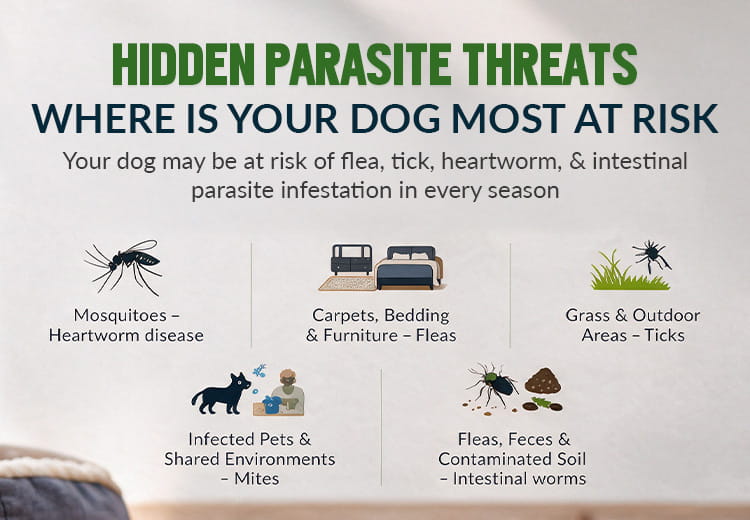
Fleas and ticks don’t vanish when the summer ends. Their activity varies with temperature, humidity, geography, and the environment around your home. Some ticks remain active during cooler months, while fleas can survive indoors throughout the year. That makes waiting for “parasite season” a risky approach, especially in areas with year-round parasite activity.
Roundworms, hookworms, and whipworms can contaminate soil and other environments through the infected dog’s poop. Some parasite eggs and larvae can survive outside the host for a long time, creating ongoing opportunities for dogs to become infected. Even after the treatment, your dog may remain exposed to the infested environment. That’s why following a deworming schedule using a vet-recommended dog dewormer matters.
Heartworm disease is transmitted when an infected mosquito bites a dog and deposits infective heartworm larvae. Once inside a dog, heartworm larvae can develop into adult heartworms. These worms can damage the lungs and heart and may eventually become life-threatening. Therefore, consistent, year-round heartworm prevention treatment for dogs is highly recommended by veterinary professionals.
If your dog spends most of its time indoors, that may reduce some exposure to some types of parasites, but it doesn’t make your dog completely safe. Fleas can enter homes, and ticks can hitchhike indoors on people or pets. Dogs can swallow eggs of worms and get infected through fleas, prey, or mosquito bites. Even dogs with limited outdoor access can therefore encounter parasites.
Parasite preventives are designed to be given at specific intervals. Missing or delaying a dose can create a gap in protection during which your dog may be exposed to parasites. If you miss a dose, check the product instructions and contact your veterinarian. What should happen next to minimize your dog’s risk depends on the treatment, parasite exposure, and length of the gap.
Here’s what you can do to keep your dog safe from fleas, ticks, worms, and other common parasites:
The right parasite prevention option depends on your dog’s individual risk, lifestyle, age, weight, and health. Your veterinarian can help choose an appropriate product for your dog from the following options:
Flea and tick preventives are available in various forms, such as topical spot-ons, chewable tablets, and convenient collars. These products can help control flea infestations and protect against certain tick species, depending on the product.
Popular options: NexGard Chewables, Bravecto Topical, Seresto Collar
Heartworm disease preventives are designed to protect dogs from heartworm disease caused by Dirofilaria immitis. Some heartworm prevention treatments may also help control certain intestinal worms or other parasites, making consistent administration particularly important.
Popular options: Heartgard Plus for Dogs, Nuheart Tablets, Valuheart for Dogs
Deworming treatments target common intestinal parasites like roundworms, hookworms, tapeworms, and whipworms, depending on the product. Your veterinarian may recommend treatment based on fecal testing, your dog’s age and lifestyle, and local parasite risks.
Popular options: Drontal for Dogs, Triworm-D Dewormer, Cazitel Allwormer
Combination preventives can protect against multiple parasites with a single product. They can simplify the parasite prevention routine for you, but the specific parasites covered vary by product, so always check the product label and discuss your dog’s needs with your veterinarian.
Popular options: NexGard Spectra, Simparica Trio
(Important note: Depending on the product, parasite preventives can offer protection against various parasites for different time durations. Always check the frequency of application on the product label and maintain a consistent treatment schedule as recommended by your veterinarian.)
Parasite prevention in dogs is not a seasonal task. It only works properly when followed as a routine. Fleas, ticks, intestinal parasites, and heartworms can affect dogs in different ways, but reducing your dog’s risk can be quite simple with the right parasite-prevention plan and consistency all year long.